New ISO Standard Puts Climate Action at the Heart of Facility Management in Botswana
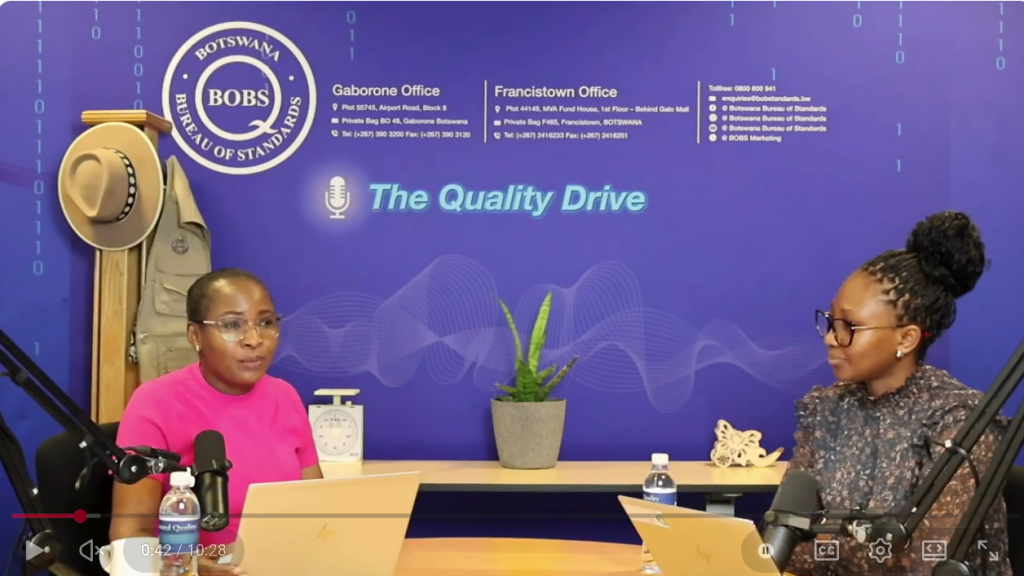
THE QUALITY DRIVE PODCAST
Gaborone, Botswana – A new episode of The Quality Drive Podcast, produced by the Botswana Bureau of Standards (BOBS) , has broken down a significant update to facility management practices: the introduction of BOS ISO 41001:2018/Amd 1:2024.
Published on April 21, 2026, the episode explains how this amended standard formally integrates climate action into the day-to-day management of buildings, energy systems, water use, and waste handling for organizations across Botswana.
From National Strategy to Practical Action
The discussion highlights a crucial shift: high-level national climate goals—such as Botswana’s commitment to reach net-zero emissions by 2050—can only be achieved if organizations at every level take concrete steps. The amended ISO 41001 provides a ready-made framework for facility managers to do exactly that.
Rather than treating climate action as an add-on or a reporting burden, the standard makes it a core part of operational efficiency. Facility managers are now guided to:
- Identify and reduce climate-related risks (e.g., water scarcity, heat stress on equipment).
- Improve energy and resource efficiency.
- Align maintenance and infrastructure decisions with sustainability priorities.
A Practical Tool for Real Impact
The podcast episode emphasizes that this is not merely a paperwork exercise. By following the BOS ISO 41001:2018/Amd 1:2024, organizations can:
- Lower operational costs through smarter energy and water use.
- Reduce their carbon footprint without disrupting core business functions.
- Demonstrate credible climate leadership to clients, regulators, and the public.
For Botswana, where solar energy potential is high and water management is a growing concern, the standard offers a locally relevant pathway to align facility operations with national development and climate resilience goals.
Supporting Botswana’s Broader Climate Agenda
While the national Long-Term Low Emissions Development Strategy (LTS) sets the 2050 vision for the entire economy, standards like BOS ISO 41001 translate that vision into daily practice. Every office building, factory, warehouse, hospital, and school that adopts the standard contributes directly to the country’s emissions reduction targets.
The Botswana Bureau of Standards is encouraging facility managers, private companies, and public sector institutions to adopt the amended standard as a practical first step toward meaningful climate action—without waiting for large-scale infrastructure projects or international funding.
What’s Next?
The episode concludes with a call to action: organizations should begin reviewing their current facility management systems against the new requirements. Training and guidance materials are expected to be made available through BOBS to support implementation.
As one speaker in the podcast notes, “Climate action is no longer just a national policy—it is now a facility manager’s daily responsibility.”
— End of Article —